Entry · Ref H_K-RPOB
Chemical & Physical Peptide Evaluation
- Posted
- 2026-10-24
- Last amended
- 2026-10-24
- Account
- @jaredibom173
Peptide Pureness Analysis Solution
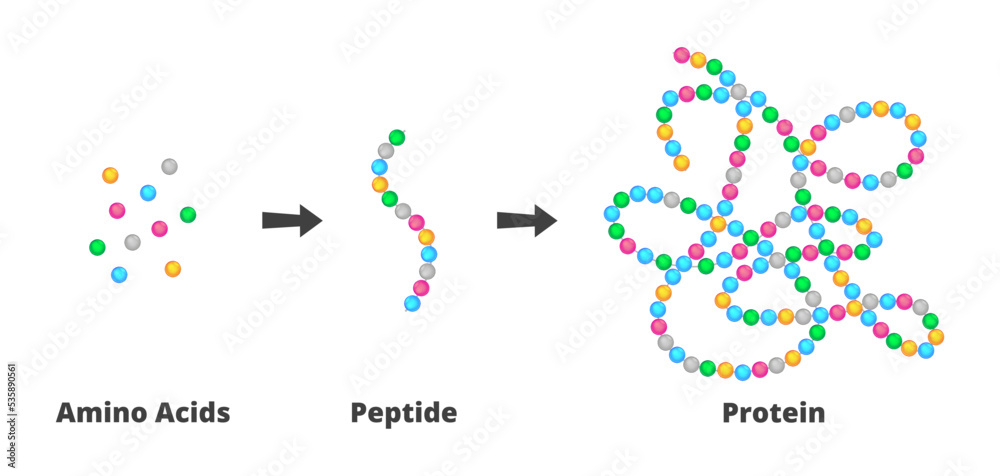
The gold criterion for measuring peptide pureness is high-performance liquid chromatography, globally abbreviated as HPLC. If you see a purity percentage on a peptide item, it almost certainly came from an HPLC analysis. This issues because peptides are developed one amino acid at a time via solid-phase peptide synthesis (SPPS). At each action, there's a tiny opportunity that something goes wrong-- an amino acid does not connect, the incorrect adjustment happens, or a side reaction generates an unintentional by-product. Over a chain of 10, 20, or 40 amino acids, those small per-step mistake prices substance.Understanding Peptide Pureness Testing
- We choose methods according to peptide length, hydrophobicity, fee profile, and modification condition instead of forcing every example into one template.
- FDA and the European EMA have developed guidelines mandating extensive analysis and quality control for peptide products to make sure safety and security and effectivenessr.
- If covering isn't perfectly reliable, an uncoupled chain can continue to elongate in succeeding actions, producing a peptide that's just one deposit short of the target.
- If the COA details "complete impurities", that complements the pureness number (e.g., 98% pureness indicates 2% overall impurities).
Theoretically, peptide purity is measured by the chromatogram produced by reversed stage HPLC, and on top of that, we can obtain the number and relative quantity of possible byproducts by computing the peak area. A premium chromatogram has a single, in proportion main optimal with a level standard on either side. " Trailing"-- where the optimal trails off gradually on one side-- can show column troubles, sample overloading, or second interactions in between the peptide and the stationary phase. In this setup, the fixed phase is Cellular Function hydrophobic (water-repelling), generally Click for source C18-bonded silica. The mobile phase is a slope of water and an organic solvent like acetonitrile, commonly with a small amount of trifluoroacetic acid (TFA) to hone the peaks.
Research Study Uses Peptide Chemical & Physical Evaluations
Not every application demands 99% purity, and purification is a substantial part of peptide manufacturing cost. Trace amounts of solvents utilized throughout synthesis and purification-- acetonitrile, dimethylformamide (DMF), dichloromethane-- can stay in the end product. These are usually existing at very low levels in effectively produced peptides and are governed by ICH Q3C guidelines for appropriate limitations. If the target peptide's peak represent 99.1% of the complete peak location, the peptide is reported as 99.1% pure by HPLC. Many trustworthy research peptide suppliers make use of third-party laboratories; some conduct internal testing with magazine of laboratory credentials.HPLC can show the existence of extra heights; LC-MS can assist appoint likely identities to those associated varieties. Oxidation modifications molecular properties and can shift retention behavior, producing unique chromatographic tops or related mass shifts. With each other, these devices give a clear and comprehensive photo of peptide structure, ensuring scientists can trust their information. Kai is the laboratory's AI study assistant-- powered by Claude (Anthropic) and GPT (OpenAI)-- responsible for technical writing, literary works review, COA confirmation, and compound evaluation.
Where Can I Buy Lab Tested Peptides?
The injector introduces an accurate volume of sample into the mobile-phase stream. Regular injection volume matters due to the fact that straining the column can broaden heights, misshape pureness estimates, or conceal nearby pollutants. A strong peptide testing workflow makes use of approaches that answer corresponding questions. The table below is the functional method to think about usual examinations when checking out a peptide COA.